
The $0 Staging Strategy That Helps Homes Show Better (Without Buying a Thing)
The $0 Staging Strategy That Helps Homes Show Better (Without Buying a Thing)
Most sellers think staging means buying new stuff. It doesn’t.
The homes that show the best usually aren’t the most decorated — they’re the most edited.
And if that surprises you, you’re not alone. Because when people hear the word “staging,” they picture new pillows, expensive furniture rentals, and shopping lists that spiral fast. The truth is: professional staging can absolutely be helpful when it fits the home and the budget… but most of the time, the biggest transformation comes from simpler changes.
Not adding more. Removing what’s in the way.
When a home feels calm and intentional in photos, it tends to feel that way in person too. And that’s when buyers stay longer, walk slower, and start picturing their own life there.
So if you’re prepping for photos or showings and you don’t want to spend a bunch of money (or you don’t want the stress of turning your home into a showroom), here’s where I’d start.
Don’t Start by Shopping. Start by Editing.
The goal of staging isn’t to make your home look like someone else’s.
It’s to help your home feel:
-
open
-
clean
-
easy to understand
-
easy to imagine living in
Because buyers aren’t just buying square footage. They’re buying the feeling of the space—and that happens fast,especially online.
Haus Tip: The Highest-Impact $0 Staging Moves
1) Clear Surfaces
Kitchen counters, bathroom vanities, nightstands, coffee tables — these photograph best when they’re simple and mostly empty.
When surfaces are crowded, even a beautiful home can feel visually “busy,” and that busy feeling often reads as smaller in photos.
Quick rule: if a surface has more than a couple items on it, it’s time to edit.
2) Put Away Visual Clutter
If it piles, stacks, or crowds a shelf… it will feel twice as busy in photos.
This isn’t about having a “perfect” home. It’s about giving buyers a clean visual experience so they can focus on the space itself.
Think:
-
paperwork and mail
-
crowded shelves
-
too many small decorative items
-
countertop appliances you don’t use daily
-
overflowing baskets
The less distraction, the more expensive the home feels.
3) Simplify Wall Art
Wall décor is one of the easiest places for a home to start feeling visually noisy without the homeowner even realizing it.
If there’s too much going on, rooms can feel smaller on camera.
A few intentional pieces almost always photograph better than a wall full of smaller ones competing for attention.
4) Remove Extra Furniture + Create Clear Walkways
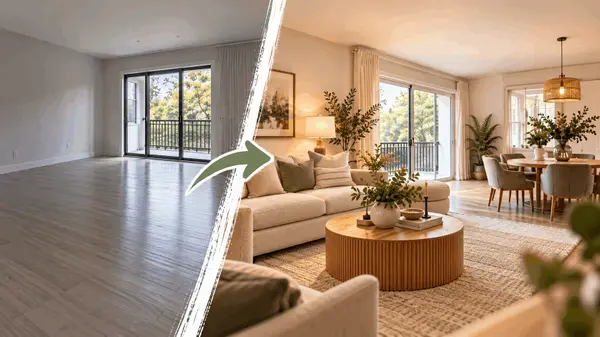
This is one of the biggest “before and after” changes you can make without spending a dollar.
Extra side tables, extra chairs, pieces that interrupt the natural flow—those can quietly shrink a room in photos and in person.
If buyers have to weave around furniture, they don’t think:
“Nice furniture.”
They think:
“This room feels tight.”
Sometimes removing one piece is all it takes to make a room feel instantly larger.
5) Let the Focal Points Stand Out
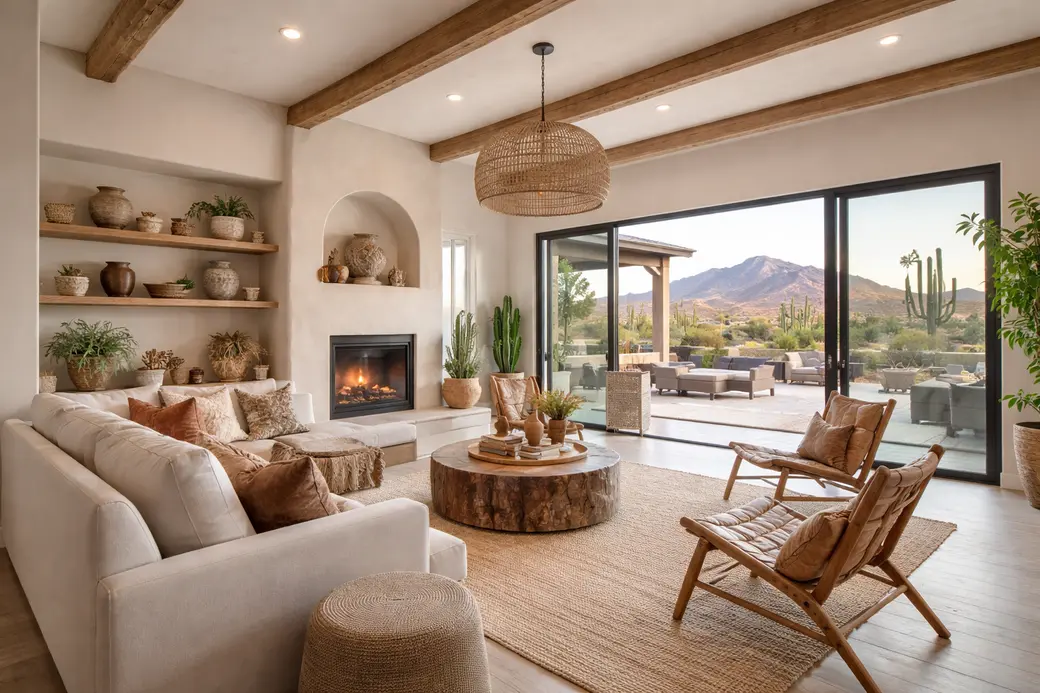
Big windows, fireplaces, high ceilings, natural light — those are the features buyers fall in love with.
The goal is to arrange the room so those features shine first, not compete with furniture placement or too many decorative “moments.”
If a buyer’s eyes don’t know where to land when they walk in, the room feels chaotic even if it’s clean.
6) Make the Layout Make Sense Immediately
Buyers should understand how they’d live in the space within seconds:
-
where they’d sit
-
where they’d eat
-
where they’d gather
-
how the home flows from room to room
When the purpose is clear, the home feels more livable—and when it feels more livable, it shows better.
Why This Matters More Than Ever (Especially Online)
One of the best reminders from this week: professional photos don’t create the feeling — they capture what’s already been prepared.
In today’s market, buyers are making fast decisions online. If the listing photos feel cluttered, confusing, or overly full, they scroll right past—even if the house is objectively a great home.
But when a home feels open, calm, and intentional?
That’s when people save it, share it, and schedule a showing.
The Bottom Line
The goal isn’t perfection. It’s clarity.
Not to make your home look like someone else’s — but to make it feel open, clean, and easy to picture living in.
And if staging is in the budget? Amazing. It can absolutely help.
But if it isn’t, you’re not stuck. The right edits can do more than most people realize.
If You Enjoyed This Insight…
If you’re even beginning to think about selling—now or down the road—understanding how buyers experience your home online (and in person) is a powerful first step. Thoughtful prep and intentional marketing aren’t about doing more. They’re about doing the right things, in the right order.
If you’d like to talk through what that could look like for your home, I’m always happy to help.
I also share deeper homeowner and market insights every Wednesday morning in my weekly newsletter, from lifestyle stories to practical real estate guidance rooted in what’s really happening here in the Valley. If you’d like those delivered straight to your inbox each week, you can subscribe here.
Categories
Recent Posts