
Have a Plan. Don't React. What Every Phoenix Seller Needs to Know About Buyers Right Now

Have a Plan. Don't React. What Every Phoenix Seller Needs to Know About Buyers Right Now
If you are thinking about listing your home in Phoenix this year, there is something worth understanding before you put a sign in the yard. The market is not broken. It is not a seller's market and it is not a buyer's market in any clean, definitive way. It is something more nuanced than that — and that nuance is showing up most clearly in how buyers are behaving right now.
What I am seeing across transactions is a buyer pool that is hesitant, inconsistent, and in some cases making decisions that do not reflect the market they are actually in. That is not a reason to wait on listing. It is a reason to go in with a strategy that accounts for it.
Here is what is happening — and what it means for you as a seller.
What Buyers Are Actually Doing Right Now
They say they will write. Then they go quiet.
This is probably the pattern I see most right now. A buyer walks through a home, loves it, asks thoughtful questions, tells their agent they are ready to move. And then nothing. Days pass. The window that felt certain closes.
It is not always bad faith. Buyers in this market are processing a lot — economic uncertainty, mixed signals about where prices are heading, the weight of a decision that feels bigger than it used to. But for sellers, the practical reality is the same: verbal interest does not mean a signed contract, and you cannot plan around a buyer who has not committed.
A good listing strategy accounts for this from the start rather than treating every showing as a guaranteed outcome.
They are using the BINSR period as an exit.
The BINSR — the Buyer's Inspection Notice and Seller's Response — is a standard part of the Arizona contract process. It exists to allow buyers to raise legitimate inspection concerns and negotiate repairs or credits. What it is not designed to be is a general opt-out after a buyer has a change of heart.
But that is how some buyers are using it right now. Issues that would have been negotiated through in a more competitive market are becoming reasons to walk. Items that are manageable, expected, or already priced into the offer become the stated reason for cancellation when the real reason is cold feet.
Sellers need to understand this going in. It does not mean every buyer will do this. It means your representation needs to be skilled at reading which buyers are serious and which ones are looking for a way out they haven't found yet.
They are coming in with offers that do not reflect the market.
Lowball offers are not new. But the flavor of them right now feels different — less strategic, more disconnected. Some buyers are anchoring to numbers that have no basis in the current data. Others are asking for seller concessions that their own loan type does not even allow, which tells you they're just coming in swinging.
This matters to sellers because an offer that looks like activity is not always an offer worth pursuing. Knowing the difference — what is worth countering, what is worth walking away from, and what is worth keeping alive while you wait for something better — is where strategy earns its keep.
They are comparing your home to new construction.
This one has become a real factor in the Phoenix market. Buyers are benchmarking resale homes against builder incentives, rate buydowns, and price-per-square-foot on new construction — sometimes in communities that are not remotely comparable in location, lot size, or finish level.
New builds come with their own tradeoffs: longer timelines, HOA structures, less established neighborhoods, and incentives that are often built into the price rather than added on top of it. But buyers do not always see it that way. They see a number and a package and they hold it up against your resale home as if the comparison is straightforward. Often it is not.
Sellers in the Phoenix market need to know their home is being evaluated against that. How you price, how you present, and how you tell the story of your property all factor into how it holds up against that comparison.
Contingent buyers are caught between two decisions at once.
A meaningful portion of buyers right now need to sell their current home before they can fully commit to buying yours. They want to move. They may genuinely love your property. But they cannot perform without their own sale in place, and that uncertainty shows up in every aspect of the offer — price, terms, timelines, and contingencies.
A contingent offer is not automatically a bad offer. But it requires a clear-eyed assessment of what you are actually agreeing to and what your exposure looks like if their sale falls through. That is a conversation worth having before you counter, not after.
Why This Is Not About Your Home
One of the most important things I tell sellers right now is this: when a buyer walks, when an offer comes in low, when someone uses the inspection period to exit a deal they got cold feet about — that is almost never about your home.
It is about a market that is sending mixed signals. It is about buyers who are making one of the largest financial decisions of their lives in an environment that does not feel stable or predictable. It is about a purchasing psychology that has shifted significantly from what we saw two or three years ago.
Sellers who understand this do not panic when something unexpected happens. They assess, they advise with their agent, and they make a decision from a position of clarity. Sellers who take it personally — who drop their price impulsively or accept terms they should not — are reacting to a situation rather than managing it.
The market is workable. The buyers who are serious and qualified are out there. But getting to them requires patience, preparation, and a strategy that does not fall apart the first time something goes sideways.
The Strategy That Holds
Price it right from day one.
In this market, overpricing is not a negotiating tactic. It is a liability. Homes that come in above where the data actually supports them sit. And when a home sits, buyers start asking why — which creates a perception problem that is harder to recover from than the original pricing conversation.
Pricing correctly from the start positions your home to attract serious buyers, generate early momentum, and close on a timeline that works for you. It is not about leaving money on the table. It is about not losing the buyers who would have paid full value but moved on because your home had been sitting for six weeks.
Present at a level that removes hesitation before it starts.
Buyers in this market are looking for reasons to pause. The condition of a home, the quality of the photography, the way a listing is positioned and marketed — all of it either builds confidence or creates doubt. In a market where buyers are already prone to hesitation, you cannot afford to give them anything to hesitate about.
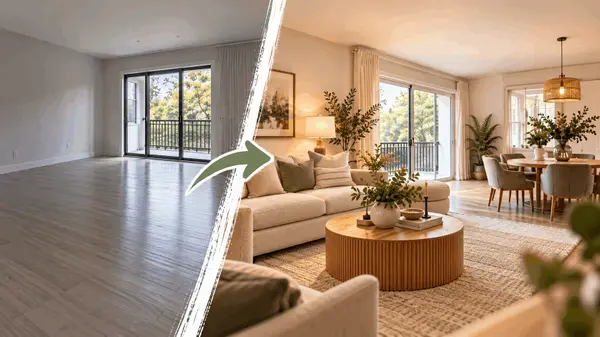
That means investing in presentation. It means professional photography and marketing that reaches the right buyer pool, not just the local MLS. It means showing up in the market looking like you mean it, because buyers notice the difference between a listing that was prepared and one that was not.
Qualify what comes in — not just what it looks like on paper.
An offer is not just a price. It is a buyer's financial position, their contingencies, their timeline, and their ability to actually close. In a market where some buyers are not as prepared as their offer suggests, it matters to look past the number and understand what you are actually agreeing to.
That is part of the job. Knowing which offers are worth countering, which ones are fishing, and which ones look imperfect on the surface but represent a buyer who will actually perform — that is where experience shows up.
Stay the course when things get unpredictable.
Something unexpected will probably happen. A buyer will go quiet. An offer will come in that does not make sense. A showing will feel promising and lead nowhere. That is the market right now, and it is not a sign that something is wrong with your home or your strategy.
The sellers who come out of this well are the ones who hold their position. They do not slash their price because a buyer made a low offer. They do not accept concessions they should not because they are worried about losing a deal that was not solid in the first place. They trust the process, stay in communication with their agent, and make decisions from a place of strategy rather than anxiety.
What Good Representation Looks Like in This Market
There is a version of listing representation that is mostly administrative — get the home on the MLS, schedule showings, present offers, and let the market do its thing. That version works fine when the market is doing most of the heavy lifting for you.
This market requires something different.
It requires an agent who is reading buyer behavior in real time and advising accordingly. Who knows how to keep multiple conversations alive without tipping your hand. Who can look at an offer and tell you honestly whether it is worth pursuing or whether you are better off waiting. Who does not react to every development as if it is a crisis, because it is not — it is just the market.
The goal is not just to get offers. It is to get to the closing table with the right buyer, on terms that make sense, without burning through your patience or your position getting there.
That is what we do at Desert Haus. If you are thinking about listing this spring and want to know what you are actually walking into, I would rather you have the full picture before you are in the middle of it.
I also share deeper homeowner and market insights every Wednesday morning in my weekly newsletter, from lifestyle stories to practical real estate guidance rooted in what's really happening here in the Valley. If you'd like those delivered straight to your inbox each week, you can subscribe here.
Categories
Recent Posts